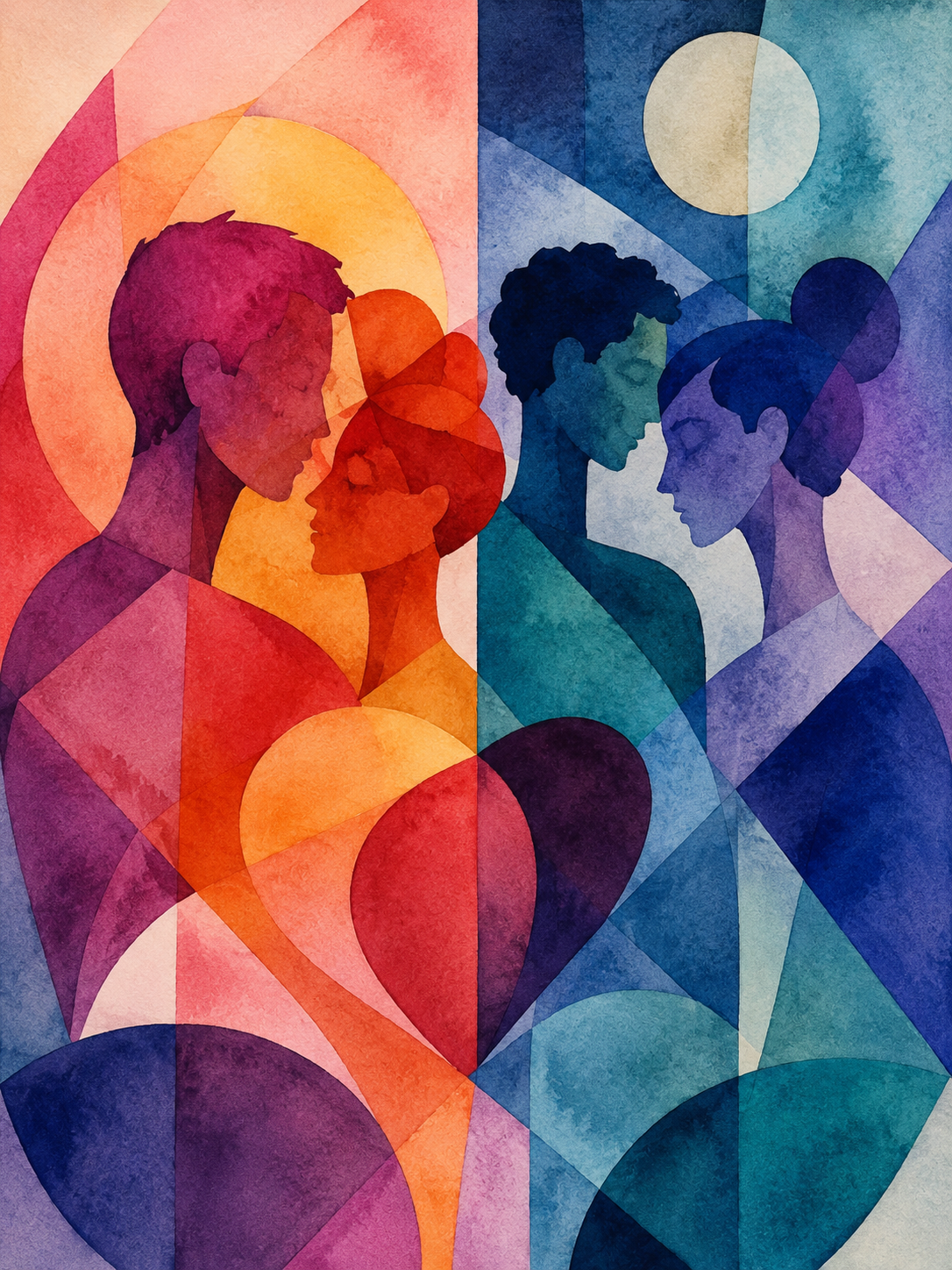
Attraction is the spark that draws LGBTQ people toward one another, while compatibility is the day‑to‑day fit that determines whether a relationship can actually be safe, sustainable, and nourishing over time. In my work with LGBTQ+ individuals and couples, I see many people over‑prioritize chemistry and under‑estimate how much shared values, emotional safety, and life alignment matter for long‑term happiness.
Why This Distinction Matters in LGBTQ Dating
In LGBTQ communities, dating often happens under pressure: minority stress, safety concerns, and limited local dating pools can make any spark feel precious and urgent. That intensity can blur the line between being powerfully attracted to someone and actually being compatible with them in everyday life.
Because many LGBTQ relationships operate in environments with stigma, family rejection, or lack of legal protections, the cost of choosing partners based mainly on attraction can be particularly high. Research also shows that LGBTQ couples are resilient, but they face unique stressors that amplify the impact of relationship dynamics on mental health and overall well‑being.
Defining Attraction in LGBTQ Dating
Attraction is the internal pull you feel toward someone—romantic, emotional, sexual, intellectual, or aesthetic. For LGBTQ people, attraction can be especially complex because it’s intertwined with identity development, “catching up” on adolescence, and sometimes years of suppressing who you’re drawn to.
In queer dating spaces, attraction can show up as:
- The excitement of finally seeing “your people” after growing up isolated or closeted.
- A powerful draw toward partners who feel familiar because they mirror earlier experiences, even when those patterns were painful.
- A rush toward intense chemistry that feels affirming, validating, or like proof that your identity is “real.”
Attraction is not a problem; it’s a vital part of desire, intimacy, and joy. But when attraction is confused with compatibility, people can accidentally build relationships on energy that doesn’t translate into daily safety and mutual care.
Defining Compatibility in LGBTQ Relationships
Compatibility is about how well two (or more) people’s lives, nervous systems, and values work together in practice. It includes how you handle conflict, your relationship to commitment, your sense of timing, and the way your identities and life priorities intersect.
Research on LGBTQ couples, including work from the Gottman Institute and other relationship scholars, points to core elements of compatibility that support healthy relationships:
- Emotional responsiveness and the ability to repair after conflict.
- Shared or at least respected values around monogamy, non‑monogamy, family, and community.
- Mutual support in navigating minority stress, coming out, and safety in different environments.
Compatibility doesn’t mean you are the same; it means the way you differ is workable, respectful, and sustainable over time.
How Minority Stress Complicates Attraction and Compatibility
Minority stress theory describes how chronic stressors such as discrimination, stigma, and internalized shame affect LGBTQ mental health and relationships. These external pressures can push people toward relationships that soothe immediate pain (loneliness, invalidation, family rejection) but are not compatible long‑term.
Common ways I see minority stress shaping dating patterns:
- Settling for partners who are inconsistent, emotionally unavailable, or even unkind because “there aren’t many options.”
- Mistaking trauma bonding or shared pain for deep compatibility or “soulmate” status.
- Moving very quickly into co‑habitation or entanglement to escape unsafe homes or hostile environments.
Attraction in those moments often centers on who feels like relief from isolation. Compatibility asks a different set of questions: can we communicate clearly, support each other’s growth, and handle stress together without harming each other over time?
Patterns I See Around Attraction in LGBTQ Clients
From my perspective as a therapist, there are repeat patterns in how attraction shows up for LGBTQ individuals and couples:
- High intensity, fast escalation
Many clients describe relationships that go from first date to “we’re inseparable” in days or weeks, especially when there’s a strong sense of finally feeling seen as queer or trans. This can feel euphoric but often bypasses deeper conversations about core needs and boundaries. - Magnetism to the unavailable
People can feel strongest attraction toward partners who are closeted, partnered, emotionally distant, or inconsistent, often because this dynamic echoes earlier attachment injuries. The intensity is real, but it’s fueled by anxiety and longing more than true mutual availability. - Attraction tied to validation
For many queer and trans clients, being chosen by someone attractive, charismatic, or socially powerful can feel like proof of worth or desirability after years of feeling “other.” That validation can keep people tied to relationships that are unkind or chaotic. - Confusing sexual chemistry with relational capacity
Strong sexual or romantic chemistry is often interpreted as “they must be my person,” even when there’s limited follow‑through, poor communication, or misalignment around big life choices.
These patterns don’t mean you’re “bad at relationships”; they’re understandable responses to a world that has not always treated LGBTQ love as ordinary and worthy. But naming them creates space to make more grounded choices.
Patterns I See Around Compatibility in LGBTQ Couples
On the other side, when I work with LGBTQ couples who are building something more stable, different patterns show up:
- Shared values around identity and community
Even when partners are at different points in their coming‑out process, compatible couples respect each other’s pace and safety needs, and they negotiate visibility together. - Collaborative conflict, not just chemistry
Research shows that conflict management—how you handle disagreements—is a strong predictor of relationship satisfaction in queer relationships. In sessions, I see compatible couples move from blame to curiosity more easily, and they are willing to learn new tools. - Intentional boundaries with exes, apps, and chosen family
Because community circles can be small, compatibility often includes clarity about ex‑partners in friend groups, social media, dating apps, and how each partner’s chosen family fits into the relationship. - Aligned or respectfully negotiated relationship structures
Whether monogamous, monogamish, or non‑monogamous, compatible partners share realistic expectations about fidelity, transparency, and emotional safety in their chosen structure.
These couples still struggle; what’s different is their willingness and capacity to repair, and their alignment around key values like respect, honesty, and care.
Research‑Backed Ingredients of Compatibility
Empirical research on LGBTQ relationships, although still limited compared to straight couples, highlights several compatibility factors that support health and resilience.
Key ingredients include:
- Assurances and commitment signals
Providing verbal and behavioral reassurances—reaffirming commitment, expressing appreciation—is strongly linked to better relationship outcomes among LGBTQ partners. - Shared social networks and supportive community
Spending time with supportive friends and a shared social circle predicts higher relationship satisfaction and commitment for queer partners. - Constructive conflict management
Being able to pause, regulate, listen, and return to repair after conflict correlates with greater relational resilience. - Openness and emotional vulnerability
Queer partners who share more openly about their inner world, needs, and identity experience stronger decision‑making and trust. - Equitable sharing of tasks
Fair division of household responsibilities and life logistics supports shared decision‑making and reduces resentment in same‑sex couples, similar to different‑sex couples.
These elements don’t guarantee attraction, but when they’re present alongside a reasonable level of chemistry, they tend to predict relationships that feel safe enough to grow.
Attraction Without Compatibility: Common Red Flags
In my clinical work, some situations show up repeatedly where attraction is strong but compatibility is weak. A few common red flags:
- You feel anxious more than grounded
The relationship feels like a rollercoaster: big highs, deep lows, and very little stability. You spend more time guessing what they think than actually hearing it. - Core values are misaligned
You may want commitment, transparency, or monogamy while your partner avoids labels or accountability, or you differ sharply on future goals like children, location, or community life. - You feel smaller around them
Over time, you notice you’re editing yourself, hiding parts of your identity, or downplaying needs to keep the peace or prevent rejection. - They don’t show up in hard moments
Attraction may be intense when things are fun, but in crisis—mental health struggles, family conflict, discrimination—they become distant, critical, or unreliable. - Ongoing confusion about the relationship
You’re unsure if you’re partners, “talking,” friends with benefits, or something else, and any attempt to clarify is met with defensiveness or deflection.
When I see these patterns, therapy often focuses on nervous system regulation, attachment patterns, and strengthening internal boundaries so clients can prioritize compatibility without shaming their own desires.
Compatibility Without Strong Initial Fire
On the other side, some LGBTQ clients worry that if the first date doesn’t feel like fireworks, the relationship is “just friends.” Yet many stable queer relationships begin with moderate attraction that grows as emotional intimacy and safety deepen.
Research and clinical experience both suggest that:
- Attraction can increase as trust, vulnerability, and shared experience build.
- Feeling calm, safe, and seen—not just “swept away”—is often a better predictor of long‑term satisfaction.
- Especially for some asexual, demisexual, or gray‑sexual people, emotional compatibility is a primary anchor, with sexual or romantic attraction emerging slowly or in specific contexts.
In session, I often help clients differentiate between “no attraction” (a clear no) and “slow‑burn attraction” that might grow if compatibility and emotional connection are strong.
How This Shows Up in LGBTQ Couples Therapy
LGBTQ couples therapy, when affirming and well‑trained, creates a space to disentangle attraction and compatibility in a nuanced way. Research on LGBTQ couples’ therapy and relationship interventions emphasizes the importance of tailoring strategies to minority stress, identity development, and cultural context.
In my work with couples, this often looks like:
- Mapping each partner’s history with attraction, relationships, and coming out to understand what “chemistry” means to them.
- Naming how racism, fatphobia, transphobia, and other oppressions have shaped who they believe they are “allowed” to be attracted to or partnered with.
- Distinguishing between conflict that comes from incompatibility (misaligned values, goals, or structures) versus solvable skill gaps (communication, repair, emotional regulation).
Inclusive couples therapy aims to honor each person’s orientation and identity while supporting the relationship system in becoming more secure, honest, and aligned.
Questions to Assess Attraction vs Compatibility
I often give clients reflective questions to help them sort out whether a potential partner is mainly an attraction match or also a compatibility match.
Questions about attraction:
- What specifically draws me to this person—appearance, shared identity, charisma, mystery, validation?
- Do I feel more pulled by who they are, or by who I hope they might become?
- When we’re together, does my nervous system feel revved up, calm, or somewhere in between?
Questions about compatibility:
- Can we talk openly about boundaries, relationship expectations, and emotional needs without it turning into a power struggle?
- When conflict happens, do they show curiosity and accountability, or defensiveness and blame?
- Do our visions for the next 3–5 years of life—around work, location, community, family, and lifestyle—feel broadly aligned or at least negotiable?
- Do I feel more myself, or less myself, when I’m around them and their community?
If most of your yeses cluster around attraction questions and most of your noes around compatibility questions, it’s worth slowing down and considering what kind of relationship is actually possible with this person.
Moving From Attraction‑Driven to Compatibility‑Driven Choices
Changing how you choose partners is not just an intellectual shift; it’s nervous system work, grief work, and identity work. In therapy with LGBTQ clients, we often focus on:
- Strengthening secure attachment to self
Building internal safety and self‑trust makes it easier to tolerate loneliness and say no to relationships that are high‑chemistry but low‑safety. - Rewriting “what counts” as attractive
Over time, many clients learn to experience emotional reliability, respect for boundaries, shared humor, and anti‑oppressive values as deeply attractive—not as “boring.” - Developing clarity and boundaries in dating
Practicing early, honest conversations about relationship structure, expectations, and pace can filter out incompatible partners before deep entanglement. - Building supportive queer and trans community
When you aren’t relying on a romantic partner to meet every need for belonging and validation, it becomes easier to choose compatibility over desperation.
This is gradual work, but it often leads to relationships that are both alive and stable—where attraction and compatibility support each other instead of being in constant tension.
When to Consider LGBTQ‑Affirming Therapy
You might benefit from LGBTQ‑affirming individual or couples therapy if you recognize yourself in any of these experiences:
- You keep ending up in intense, painful relationships with similar dynamics, despite wanting something different.
- You feel torn between your desire for partnership and your fear of losing yourself or your identity in relationships.
- You and your partner(s) love each other but struggle with recurring conflicts around communication, outness, jealousy, or relationship structure.
- You’re navigating transitions—coming out, gender affirmation, relocation, family estrangement—that put additional stress on your dating or partnership.
Affirming therapy offers a space where your queerness or transness is not the problem to be “fixed,” but an integral, respected part of who you are as you clarify the kind of love and connection you truly want.
A Therapist’s Perspective: You Deserve Both
From where I sit as a therapist, you deserve relationships where you feel both lit up and deeply safe—where attraction is real, but compatibility is the foundation. Research on LGBTQ relationships underscores that queer and trans couples are resilient and capable of profound intimacy and stability when supported by affirming environments, strong communication, and shared values.
If your current or past relationships have leaned heavily on chemistry while leaving you anxious, unseen, or exhausted, that’s not a personal failure; it’s a pattern we can gently understand and change. With the right tools, support, and community, you can learn to recognize when attraction and compatibility line up—and when it might be kinder to yourself to walk away.
Ready to Explore This in Your Own Life?
If you’re curious about how these patterns show up in your dating life or current relationship, we can explore them together in a supportive, LGBTQ‑affirming space. I offer individual and couples therapy for queer and trans people who want to untangle attraction from compatibility, heal old patterns, and move toward relationships that feel grounded, mutual, and genuinely aligned with who they are.
You can reach out today to schedule a free 20–30 minute consultation call, where we’ll talk about what you’re navigating, what you’re hoping for in your relationships, and whether working together feels like a good fit for you.

Dipesh Patel, MBA, MSW, LCSW, LICSW is an individual and couples therapist specializing in Gottman Method Couples Therapy, Emotionally Focused Therapy, and Acceptance and Commitment Therapy. He works with high-achieving professionals, new and seasoned parents, the LGBTQ community, first-generation Americans, and multicultural couples navigating relationship stress and life transitions.
Responses
[…] talk about conflict around openness, sex, time, or communication instead. Underneath those issues, trust is almost always a central […]
[…] can absolutely help you break repeating LGBTQ dating patterns by making those patterns visible, understandable, and changeable in a way that […]