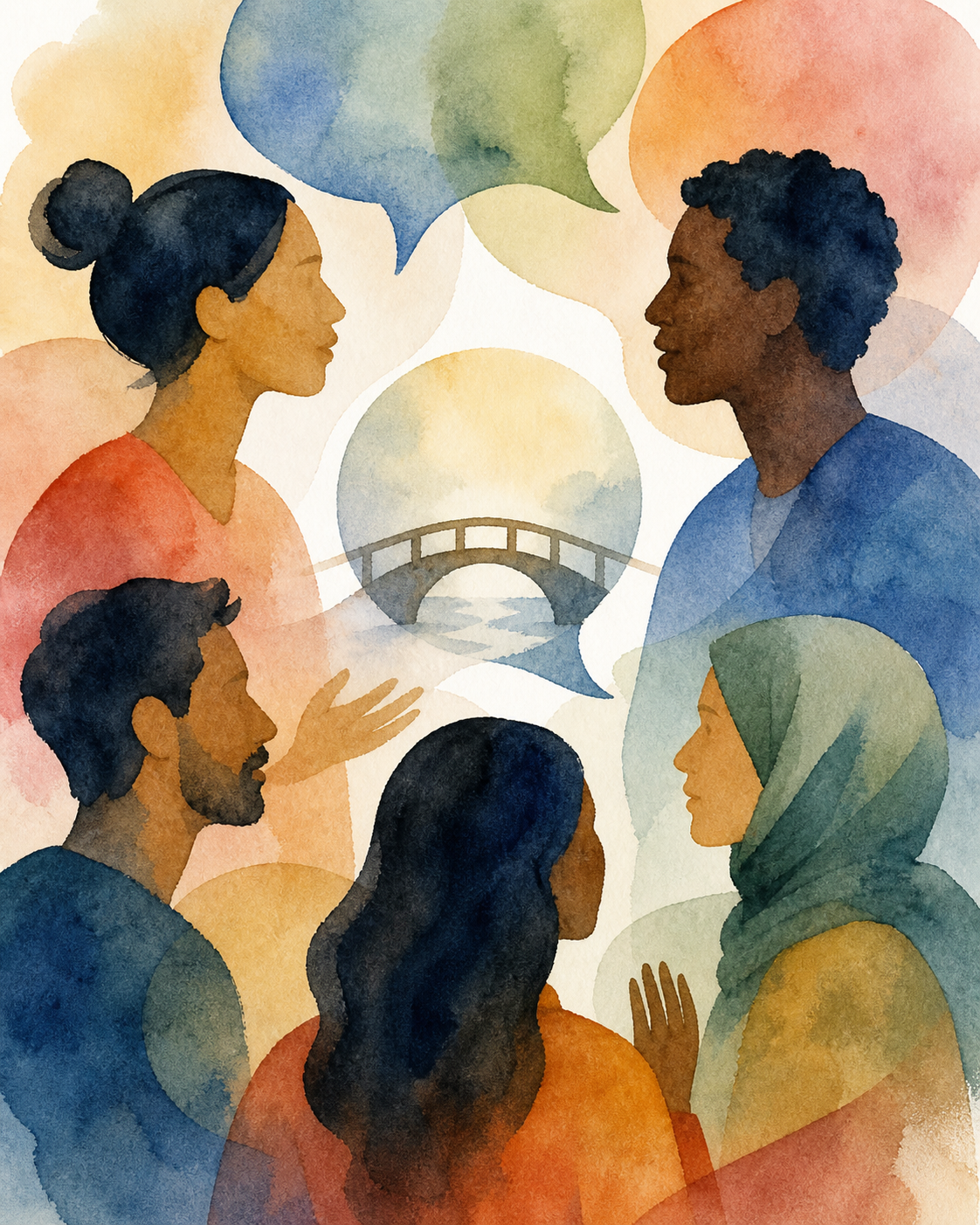

Conversations about culture can be some of the most intimate and meaningful exchanges in a relationship—and also some of the most explosive. Many of the couples and individuals I work with come in saying some version of, “We can’t talk about race, gender, politics, or our families’ cultural expectations without it turning into a fight.” They are not “too sensitive” or “bad at communication”; they’re trying to navigate layers of identity, history, and pain using tools that were designed for everyday disagreements, not cultural landmines.
As a therapist who works extensively with cross‑cultural, first‑generation, LGBTQ+, and interracial couples, I see consistent patterns in how cultural conversations go off the rails—and equally consistent pathways for making them safer, more connected, and more productive. In this article, I’ll walk through the most common patterns I see and offer concrete strategies you can start using right away to talk about culture without starting a fight.
Why Cultural Conversations Feel So Charged
Culture isn’t just “where you’re from” or “what language you speak.” It shapes:
- How you show love and care
- What you consider “normal” or “respectful”
- How you express anger, disappointment, or affection
- What role family, gender, spirituality, and community play in your life
When a partner or loved one questions your cultural norms, it often lands as a question of your character: “Are you saying my family is wrong? That my values are backwards? That I don’t belong?” Research on therapy conversations shows that when culture comes up, people are often really asking, “Do you see me, and is there space for all of me here?”
From my therapy chair, I see a few repeating themes:
- One person feels like “the cultural representative,” expected to explain or defend their background.
- The other worries about “saying the wrong thing” and withdraws or becomes overly careful and vague.
- Both feel lonely, misunderstood, or blamed—even if their intentions are loving.
These dynamics aren’t personal flaws; they’re predictable responses to feeling that your sense of self is at stake.
Common Patterns I See in Individuals and Couples
Over time, certain patterns show up so often in my work that they’re almost like “cultural conflict templates.” Recognizing them is a powerful first step in changing them.
1. “You’re Overreacting” vs. “You Don’t Get It”
- One person raises a cultural concern (“That joke felt racist/sexist/homophobic to me” or “My parents’ expectations are heavier than you think”).
- The other responds with minimization (“It was just a joke,” “You’re being too sensitive,” “That’s just how families are”).
The first person ends up feeling dismissed, while the other feels accused of being a bad person. Underneath, one is asking for validation of their lived experience; the other is asking for reassurance that they’re not being labeled as harmful.
2. Education Mode vs. Defense Mode
I often see one partner step into “teacher” mode about their culture: sharing history, context, microaggressions, or family expectations. The other slides into “defense”:
Instead of curiosity and learning, the conversation turns into a debate about who is right, or whether the hurt “makes sense.” The emotional need—to be seen and to feel safe—gets lost.
3. The Silent Truce
Some couples simply avoid cultural conversations altogether. They agree, implicitly or explicitly: “We just don’t talk about politics, race, religion, or our families’ expectations.”
On the surface, things feel calmer. But underneath, resentment and loneliness grow. One or both partners start thinking:
- “If you really knew me, you wouldn’t be okay never talking about this.”
- “I’m walking on eggshells in my own relationship.”
Research on intercultural conflict suggests that avoidance can sometimes maintain short‑term peace but often undermines long‑term intimacy and understanding.
4. Role Reversal: Public Ally, Private Shutdown
Another pattern: one partner is very vocal about social justice or cultural issues in public, but when their partner brings up personal cultural pain at home, they shut down, get defensive, or change the subject.
The message becomes: “I care about these issues in theory, but not when they involve my behavior or our relationship.” This can feel especially painful for marginalized partners who already experience invalidation in broader society.
What Actually Helps: Principles From Therapy and Research
Therapists and communication researchers have spent years studying what helps people navigate cultural differences more effectively, both in therapy and in everyday life. Their findings align closely with what I see in my own practice.
Here are core principles that consistently help:
1. Start With Relationship Safety, Not the Argument
Before diving into who’s right about a cultural issue, it helps to start by affirming the relationship and your intentions. For example:
- “I love you and I want us to be able to talk about this, even if it’s hard.”
- “I’m bringing this up because I care about us feeling closer and more understood.”
Research on difficult conversations across difference suggests that people are more open when they feel that their dignity and belonging are secure. In therapy, I often coach partners to explicitly name their commitment to the relationship at the beginning of these talks.
2. Lead With Curiosity, Not Conclusions
Curiosity is one of the most protective factors in cross‑cultural communication. Instead of assuming you know why your partner thinks or feels a certain way, ask:
- “Can you help me understand what this means to you?”
- “What feels most sensitive or important about this?”
- “How did your family or community talk about this when you were growing up?”
Studies of therapy conversations show that when therapists and clients treat cultural differences as “openings for exploration,” it leads to richer conversations and deeper understanding. The same holds true in relationships.
3. Use “I” Language About Impact
Intercultural conflict research consistently supports using “I” statements to describe your own experience instead of attacking the other person’s character. For example:
- Instead of: “You’re being racist/sexist/homophobic.”
Try: “When I heard that comment, I felt hurt and unseen because of my background.” - Instead of: “Your family is controlling.”
Try: “When your family expects us to follow certain customs, I feel pressured and worried that my needs don’t matter.”
“I” language doesn’t mean you’re watering down your boundaries or pretending everything is okay. It simply makes it easier for the other person to hear you without going straight into self‑defense.
4. Name the Cultural Layer Explicitly
In therapy, we talk about “windows of cultural opportunity”—moments when culture pops up naturally in a conversation, and you can either look through that window together, or close the blinds. Couples often try to talk about culture indirectly, which leads to confusion and misattunement.
It can be powerful to say, gently and directly:
- “I think there’s a cultural layer here we’re not naming.”
- “This isn’t just about dishes or money or time—it’s about how our cultures have shaped what we each expect.”
Research on therapy conversations shows that explicitly acknowledging cultural identities and value differences helps people feel more seen and creates openings for growth.
5. Slow the Pace and “Respect the Dance”
Not all cultures approach difficult conversations the same way. Some value direct, fast, “say what you mean” styles. Others prefer a gradual, story‑based, or more indirect approach.
When partners have different “conversation rhythms,” conflicts can escalate simply because one person feels rushed while the other feels stonewalled. Communication experts recommend:
- Pausing regularly to check in: “Is this pace okay?”
- Allowing more silence than you’re used to, especially if your partner comes from a culture where reflection and indirectness are valued.
This kind of flexibility—adjusting your style, pace, and directness—has been identified as a key part of culturally competent communication.
Practical Steps to Talk About Culture Without Fighting
Here are concrete steps I often walk couples and individuals through in therapy when they want to have better cultural conversations.
Step 1: Choose the Right Moment
Trying to talk about culture in the middle of a heated argument almost never goes well. Instead:
- Pick a calm time when neither of you is rushing.
- Let the other person know ahead of time: “There’s something cultural I’d love to talk about when we both have the bandwidth. When might be a good time?”
This “consent to the conversation” gives both of you a chance to prepare emotionally and mentally.
Step 2: Set a Shared Intention
At the beginning of the conversation, state what you each hope will come from it. For example:
- “My intention is to understand each other’s experiences better, not to win an argument.”
- “I want us both to feel safe enough to be honest, even if we don’t fully agree at the end.”
Conflict resolution research across cultural divides emphasizes the importance of focusing on shared goals and values—like mutual respect, safety, and connection.
Step 3: Share Stories, Not Just Opinions
Rather than debating ideas in the abstract (“People should be more individualistic/collectivistic,” “Families should/shouldn’t have a say in relationships”), try telling specific stories:
- “When I was a kid, my parents taught me that…”
- “The first time I realized my culture was different from others was when…”
- “In my community, we were praised when we did X and criticized when we did Y.”
Stories help your partner see how culture lives in your body and memories, not just in your politics or principles. Research suggests that culturally relevant narratives in therapy deepen empathy and broaden understanding.
Step 4: Reflect Back Before Responding
One of the most powerful skills I coach in session is simple reflection:
- “What I’m hearing is that , and that makes you feel , especially because of _ from your background. Did I get that right?”
This doesn’t mean you agree. It means you understand. Intercultural communication experts call this “mindful listening”—staying present and curious rather than planning your rebuttal. When people feel accurately understood, their nervous system calms down, and the conversation naturally becomes less combative.
Step 5: Acknowledge Impact, Even if Intent Was Different
Many cultural missteps happen without malicious intent. But pain is still pain. A key shift I see in couples who grow through these conversations is the ability to say:
- “I see that what I said hurt you because of your experiences. I’m sorry for that impact, even though I didn’t mean to harm you.”
This willingness to hold both truths—your good intent and the real impact—builds trust and strengthens the relationship. It also reflects what therapists aim to do when clients experience cultural microaggressions in session: validate the impact and explore it together.
Step 6: Co‑Create New Cultural Norms Together
In cross‑cultural relationships, you are not just negotiating “your culture vs. my culture.” You’re slowly building a third culture: “our culture.” That might include:
- Deciding together which traditions you want to keep, adapt, or let go of.
- Creating new rituals that honor both backgrounds (for holidays, family visits, or daily routines).
- Agreeing on communication norms: how you’ll bring up concerns, how you’ll apologize, and how you’ll repair after conflict.
Culturally responsive practice emphasizes collaborative goal‑setting that reflects the values of everyone involved. Your relationship can embody this by consciously designing the culture you want to live in together.
How This Shows Up in Therapy Sessions
To make this more concrete, here’s how I often work with clients around cultural conversations:
- We slow down and identify the “cultural layer” under a recurring fight—perhaps about money, parenting, privacy, or family involvement.
- I invite each partner to share what their culture taught them about this topic, and we notice similarities and differences.
- We practice using “I” statements, mindful listening, and specific stories instead of global accusations or shutdowns.
- We explore “windows of cultural opportunity”—moments when something small (a comment, a facial expression, a joke) becomes a doorway into deeper understanding rather than another argument.
Over time, couples report that these conversations become less about proving who is right and more about discovering who they each are—and who they can be together.
When You Keep Getting Stuck
Even with the best intentions and tools, some cultural conversations keep looping back to the same painful place. That doesn’t mean your relationship is doomed. It usually means you’re up against deeper layers of:
- Intergenerational trauma or family expectations
- Internalized beliefs about gender, sexuality, race, or success
- Loyalty conflicts (“If I do things differently from my family or culture, am I betraying them?”)
These are big, tender themes. They are hard to navigate alone, especially when both of you are triggered at the same time. This is exactly where therapy can create a safer container.
A culturally responsive therapist can:
- Help each of you articulate your cultural narratives with more clarity and compassion.
- Slow down the conversation so you can notice patterns and choices instead of reacting on autopilot.
- Offer language, frameworks, and skills drawn from research on intercultural communication and conflict resolution.
You don’t have to earn therapy by first “fixing” your cultural conversations. Therapy is a place to practice them.
A Note for First‑Generation, Cross‑Cultural, and LGBTQ+ Clients
If you are navigating multiple cultural worlds—perhaps as a first‑generation immigrant, a person in an interracial or interfaith relationship, or someone whose gender or sexuality places you at odds with parts of your family or community—you may feel like you’re constantly translating yourself.
Common internal experiences I hear in session include:
- “I’m too ‘traditional’ for some people and too ‘American/Western/modern’ for others.”
- “My partner doesn’t understand that I have obligations to my family that they just don’t have.”
- “I’m exhausted from explaining myself, but I’m also scared to stop explaining because I might lose people.”
In therapy, we can honor the complexity of your identities without asking you to choose a single “correct” way to be. We can explore how culture, trauma, resilience, and love intersect in your life, and how to build relationships where more of you is welcome at the table.
Ready to Practice These Conversations in a Supportive Space?
If you’re reading this, chances are you’ve already felt how painful and isolating it can be when cultural conversations end in shutdown, defensiveness, or distance. You may be tired of walking on eggshells—or tired of feeling like the only one who notices or cares about cultural impacts.
You don’t have to keep navigating this alone or hoping that, somehow, these conversations will magically get easier with time. With the right support, it’s absolutely possible to:
- Talk about culture, race, gender, family, and identity without every conversation turning into a fight.
- Feel more understood and less “too much” or “too sensitive.”
- Build a relationship (with a partner, family member, or even yourself) where your full cultural story is invited in, not pushed to the margins.
If you’d like support practicing these skills and untangling the deeper patterns underneath your cultural conflicts, I’d be honored to help. I offer telehealth sessions for individuals and couples who want a thoughtful, culturally attuned space to do this work.
You can reach out today to schedule a free 20–30 minute consultation call. In that time, we’ll talk about what you’re struggling with, what you’re hoping for, and whether we’re a good fit to work together.

Dipesh Patel, MBA, MSW, LCSW, LICSW is an individual and couples therapist specializing in Gottman Method Couples Therapy and emotionally focused therapy as well as Acceptance and Commitment Therapy. He works with high-achieving professionals, the LGBTQ community, first-generation Americans, and multicultural couples navigating relationship stress and life transitions.
Responses
[…] Cultural narratives often include strong expectations about: […]
[…] one partner refuses to bend—on schedules, extended family, sex, parenting, finances—the other often feels lonely, […]